
Johann Pachelbel (1653 - 1706). Canon and Gigue
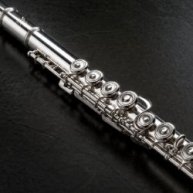
Johann Pachelbel (1653 - 1706). Canon and Gigue http://flutemasters.ru/ Флейтовый квартет FluteMasters (Санкт-Петербург): София Лубянцева, Алексей Ужегов, Олег Батаев, Александра Муковня 26.01.2014, Johanneksenkirkko -- Хельсинки (архитектор Адольф Меландер). Собор построен в 1888-1893 гг. в неоготическом стиле. Является самой большой каменной церковью Финляндии. Канон Пахельбеля (PWC 37, T. 337, PC 358), «Канон в ре мажор» является самым знаменитым произведением немецкого композитора эпохи барокко Иогана Пахельбеля. Первоначально оно было написано для трех скрипок и генерал-баса. «Канон» Пахельбеля использует комбинацию строгой полифонической формы (канон) и вариационную форму, где три голоса объединяются в канон, и четвертый, генерал-бас, играет независимую роль. Scores Johann Pachelbel Canon and Gigue - https://yadi.sk/i/rOiECnpFaikFd Pachelbel's Canon is the name commonly given to a canon by the German Baroque composer Johann Pachelbel in his Canon and Gigue for 3 violins and basso continuo (Kanon und Gigue für 3 Violinen mit Generalbaß) . It is his most famous composition. It was originally scored for three violins and basso continuo and paired with a gigue. Both movements are in the key of D major. Although a true canon at the unison in three parts, it also has elements of a chaconne. It has frequently been arranged and transcribed for many media. The Canon (without the accompanying gigue) was first published in 1919 by scholar Gustav Beckmann, who included the score in his article on Pachelbel's chamber music. Johann Pachelbel - a German Baroque composer, organist and teacher who brought the south German organ tradition to its peak. He composed a large body of sacred and secular music, and his contributions to the development of the chorale prelude and fugue have earned him a place among the most important composers of the middle Baroque era. Pachelbel's music enjoyed enormous popularity during his lifetime; he had many pupils and his music became a model for the composers of south and central Germany. Today, Pachelbel is best known for the Canon in D, as well as the Chaconne in F minor, the Toccata in E minor for organ, and the Hexachordum Apollinis, a set of keyboard variations. Pachelbel's music was influenced by southern German composers, such as Johann Jakob Froberger and Johann Kaspar Kerll, Italians such as Girolamo Frescobaldi and Alessandro Poglietti, French composers, and the composers of the Nuremberg tradition. He preferred a lucid, uncomplicated contrapuntal style that emphasized melodic and harmonic clarity. His music is less virtuosic and less adventurous harmonically than that of Dieterich Buxtehude, although, like Buxtehude, Pachelbel experimented with different ensembles and instrumental combinations in his chamber music and, most importantly, his vocal music, much of which features exceptionally rich instrumentation. Pachelbel explored many variation forms and associated techniques, which manifest themselves in various diverse pieces, from sacred concertos to harpsichord suites.